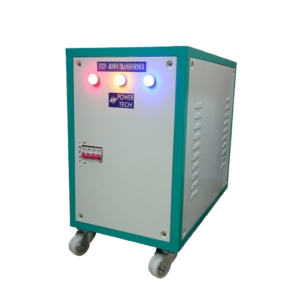
Industrial Transformers - For Imported Machineries
Transformers are essential components in electrical engineering, used to change the voltage levels in power systems. In industrial settings, three main types of transformers are commonly utilized: step-up transformers, step-down transformers, and isolation transformers. Each type serves a distinct purpose and has unique applications. In this blog, we’ll explore these three types of transformers, their functions, and their importance in industrial operations.
Step Up Transformer:
A step-up transformer increases the voltage from the primary winding (input) to the secondary winding (output). This is achieved by having more turns of wire in the secondary winding than in the primary winding.
Step Down Transformer:
Conversely, a step-down transformer decreases the voltage from the primary to the secondary winding. This is done by having fewer turns of wire in the secondary winding compared to the primary.
Isolation Transformer:
An isolation transformer is designed to isolate the secondary circuit from the primary circuit. It typically has equal turns on both the primary and secondary windings, allowing it to transfer electrical power while providing electrical isolation.
Applications
Sensitive Equipment: Isolation transformers are essential in protecting sensitive electronic equipment, such as computers and medical devices, from voltage spikes and electrical noise.
Grounding and Safety: They are used to enhance safety in industrial settings by preventing ground loops and ensuring that the secondary circuit is not directly connected to the primary power source.
Benefits
Noise Reduction: Isolation transformers help in minimizing electrical noise, providing cleaner power to sensitive equipment.
Enhanced Safety: They offer protection against electric shock and faults, making them invaluable in industrial environments.